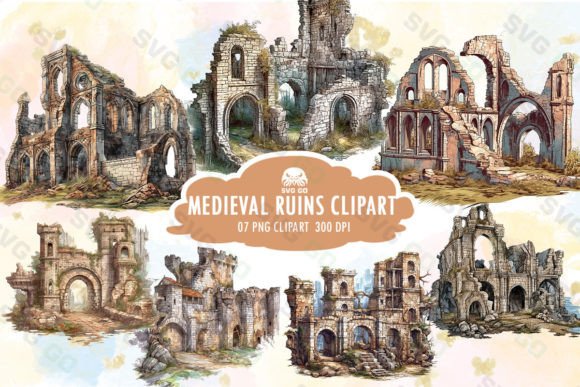
Medieval Ruins Clipart Sublimation: A Designer's Asset
Imagine transporting your audience to a world of ancient mystery and timeless grandeur with a single design element. This is the power of incorporating Medieval Ruins Clipart Sublimation into your creative toolkit. These high-resolution PNG files offer a versatile bridge between historical fantasy and modern graphic design, providing a unique aesthetic that can elevate branding, merchandise, and digital content.
The Visual Impact of Historical Imagery
In a market saturated with sleek, minimalist trends, the textured, evocative nature of medieval ruins offers a compelling contrast. These assets contribute to a strong visual hierarchy by adding depth, narrative, and a sense of story to a composition. They are not just decorations; they are conversation starters that can define a brand's character, appealing to audiences who value heritage, adventure, or a touch of gothic elegance.
Practical Applications for Creative Professionals
The true value of these clipart files lies in their adaptability. Provided as high-resolution PNGs (4500 x 5400 pixels at 300 DPI or higher), they are optimized for both print design and digital use. Consider these applications:
- Branding & Logo Design: Create a distinctive mark for a craft brewery, a fantasy author, an escape room, or a specialty bookstore. The ruins symbolize durability and mystery.
- Packaging Design: Transform product labels for artisanal goods, candles, or board games, instantly communicating a theme of exploration and antiquity.
- Marketing & Social Media Graphics: Design eye-catching posters, Facebook ads, or Instagram Stories for events, film promotions, or Halloween campaigns. The imagery drives high user engagement.
- Merchandise & Sublimation: The keyword Medieval Ruins Clipart Sublimation speaks directly to product creation. These files are perfect for printing on mugs, t-shirts, tote bags, and phone cases, allowing entrepreneurs to build a cohesive product line.
- Editorial & Web Design: Use them as background elements in magazine layouts, as featured images in blog posts about history or travel, or as thematic icons in a UI design for a gaming or educational platform.
Integrating Assets into a Cohesive Design Workflow
Effective use of clipart requires more than just placement; it demands thoughtful integration. To maintain a professional presentation, consider these guidelines:
- Color Palette Harmony: Adjust the ruins' color tones to match your existing brand palette. A monochrome filter can create a sophisticated, engraved look, while muted earth tones can enhance a vintage feel.
- Composition & Balance: Use the ruins as a central focal point or a subtle background texture. Ensure they complement, rather than overwhelm, your primary message and typography.
- Scalability & Clarity: The high resolution ensures the details remain crisp whether used as a small icon on a business card or a large hero image on a website.
- Context & Audience: Always align the asset with your audience's expectations. For a brand identity aimed at historians, accuracy is key. For a fantasy brand, artistic interpretation is welcome.
Ultimately, the strategic selection of creative assets is fundamental to impactful visual communication. Resources like Medieval Ruins Clipart Sublimation provide a foundation for telling richer visual stories, enabling designers and creators to build more immersive and memorable brand experiences. By choosing assets that align with your design goals and audience, you invest in the quality and coherence of every project you undertake.